
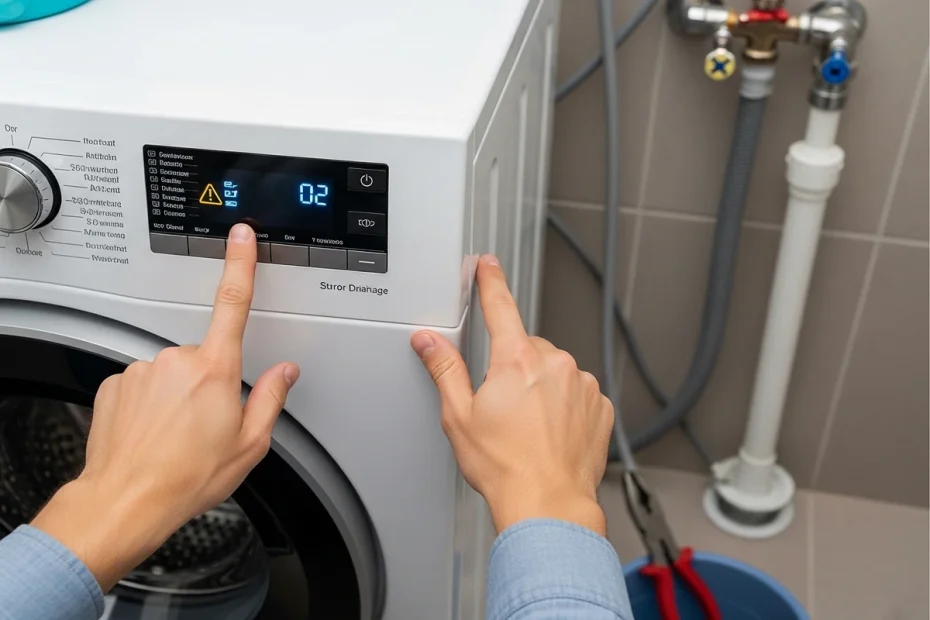
Learn how to troubleshoot and fix a washing machine that won’t drain, addressing OE and E2 error codes effectively.
Introduction to Washing Machine Drainage Issues
When your washing machine displays error codes like OE and E2, it signals a drainage problem that requires immediate attention. These codes often indicate that the machine cannot drain water properly, leading to potential damage if not resolved quickly. Timely troubleshooting can help prevent further issues and save on costly repairs, ensuring your appliance lasts longer. Understanding these error codes and their underlying causes can lead to more effective solutions.
For instance, a common scenario involves a user noticing the OE code during a wash cycle, prompting them to investigate the issue. By quickly addressing the problem, such as unclogging a drain hose or checking the drain filter, the user can prevent a more significant malfunction down the line.
Understanding OE and E2 Error Codes
The OE error code typically appears when the washing machine fails to drain within a specific time frame, often due to obstructions within the drainage system. On the other hand, the E2 error code indicates that the machine is taking too long to drain, which can affect both top-loading and front-loading models. Each washing machine brand may have slightly different definitions for these error codes, so it is crucial to refer to the owner’s manual for accurate diagnostics.
For example, in Frigidaire top-loading washers, the E2 code means the machine is experiencing a drainage issue, and the troubleshooting steps involve checking the hose and ensuring proper installation. Understanding these codes helps users quickly pinpoint the issue and take appropriate action.
Common Causes of Drainage Problems
Several factors can lead to a washing machine not draining properly, with blocked drain pathways being one of the most common culprits. Foreign objects or accumulated lint in the drain filter can hinder water flow, resulting in error codes. Additionally, malfunctioning pressure switches may incorrectly signal that water remains in the drum, leading to both OE and E2 codes. Improper installation, such as a poorly positioned drain hose, can also cause backflow and drainage issues.
For instance, if a user finds their washing machine displaying the OE code, they might discover that the drain hose is kinked or clogged, preventing water from leaving the machine. By addressing these simple issues, many users can resolve drainage problems without the need for professional intervention.
Step-by-Step Troubleshooting Guide
To troubleshoot a washing machine that won’t drain, start by verifying the power supply. Check circuit breakers or fuses to ensure the machine is receiving power. Next, disconnect the drain hose and run a short cycle to see if water drains freely from the machine, helping isolate whether the issue is with the hose or the pump. For front-loading washers, inspecting the door seal for blockages is also essential, as debris can impede drainage.
If a user continues to face issues, documenting any error codes displayed after these troubleshooting steps can assist professionals in diagnosing the problem quickly if a service call is necessary. For example, after taking these steps, a user may observe that the washer still displays an E2 code, indicating that further investigation is needed.
Safety Precautions Before Repairs
Before attempting any repairs on a washing machine, safety should be a top priority. When troubleshooting electrical components, using a multimeter to check for electrical continuity helps ensure safe handling. Additionally, keeping the work area clear of clutter reduces the risk of accidents during repairs.
For instance, a user should turn off the water supply and unplug the machine before inspecting the drain pump. Taking these precautions can prevent accidents and injuries during the repair process.
Maintenance Tips to Prevent Future Issues
To maintain a washing machine and prevent future drainage issues, running a hot water cycle with vinegar monthly can help clean the drum and prevent soap scum build-up that can affect drainage. Regularly inspecting and replacing worn hoses or seals is also crucial in avoiding leaks and blockages. Educating household members about proper washing machine use, including what items can or cannot be washed, can further prevent clogs.
For example, a family that frequently washes items with zippers or buttons without checking may inadvertently cause blockages in the drain system. By instilling proper washing practices, families can significantly reduce the occurrence of drainage problems.
When to Call a Professional
If you notice unusual noises from the drain pump or detect burning smells, it may indicate serious mechanical issues that require professional assessment. Additionally, if error codes persist after troubleshooting efforts, this may suggest the need for advanced diagnostics or parts replacement. If you’re unsure about performing repairs or lack the necessary tools, consulting a qualified technician is often the safer and more efficient route.
For instance, a user may find that after multiple attempts to address an E2 code, the issue remains unresolved. In such cases, contacting a professional can save time and ensure that the appliance is fixed correctly without risking further damage.